Rodent Control in Everett, WA
We find how rats and mice are getting into your home or business, seal those gaps, and remove what is already inside. Free inspection.

What does professional rodent control in Everett include?
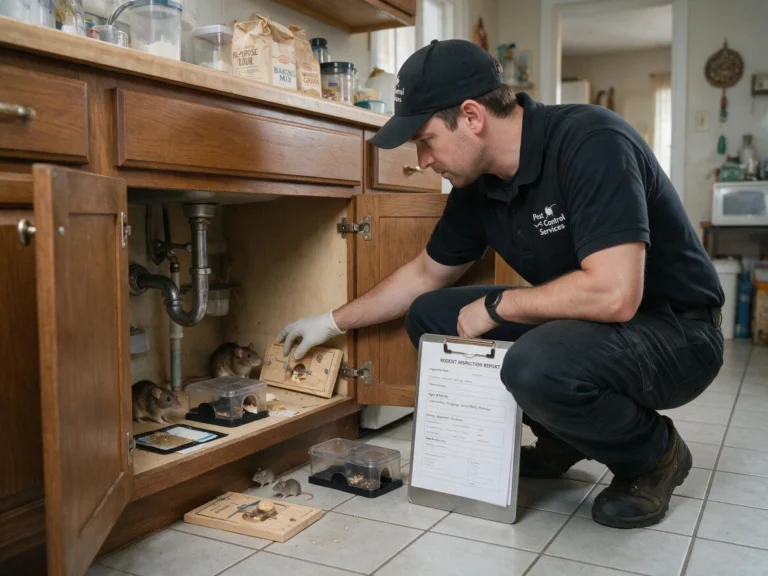
Professional rodent control in Everett has four parts: a full inspection to identify the species and every entry point, exclusion work that seals those gaps, trapping to remove rodents already inside, and follow-up visits to confirm the fix is holding. Rodent Defenders handles all four on every job.
Free inspection
We identify the species, every entry point and the nesting areas before we quote.
Itemized quote first
You see the scope and the price before any work begins.
Sealed, not just baited
Entry points are closed so new rodents cannot replace the ones we remove.
Based in Everett
2615 W Casino Rd, Everett, WA 98204. Serving Everett and Snohomish County.
Why do rodents keep coming back in Everett, WA?
Rodents keep coming back in Everett because wet weather pushes them into buildings every fall and winter, and gaps in older foundations, vents and rooflines let them in. If those entry points are not sealed, trapping only removes the rodents already inside; new ones follow the same route.
Everett has a marine climate: mild, wet winters and humidity that stays high most of the year. As temperatures drop in fall, rats and mice leave burrows and yard cover for dry, warm shelter in crawlspaces, attics and wall voids. Winter rain keeps them there once a nest is established.
Older craftsman-era homes in Bayside and Northwest Everett add moisture-softened siding, settled foundations and worn vent screens. A mouse needs a gap only the width of a dime. A rat needs about a quarter.
About 42 in
average rainfall per year in Everett
November
the wettest month of the year
73 to 85%
typical humidity through the year
Figures are long-term climate averages for Everett, WA.
What are the signs of a rodent infestation?
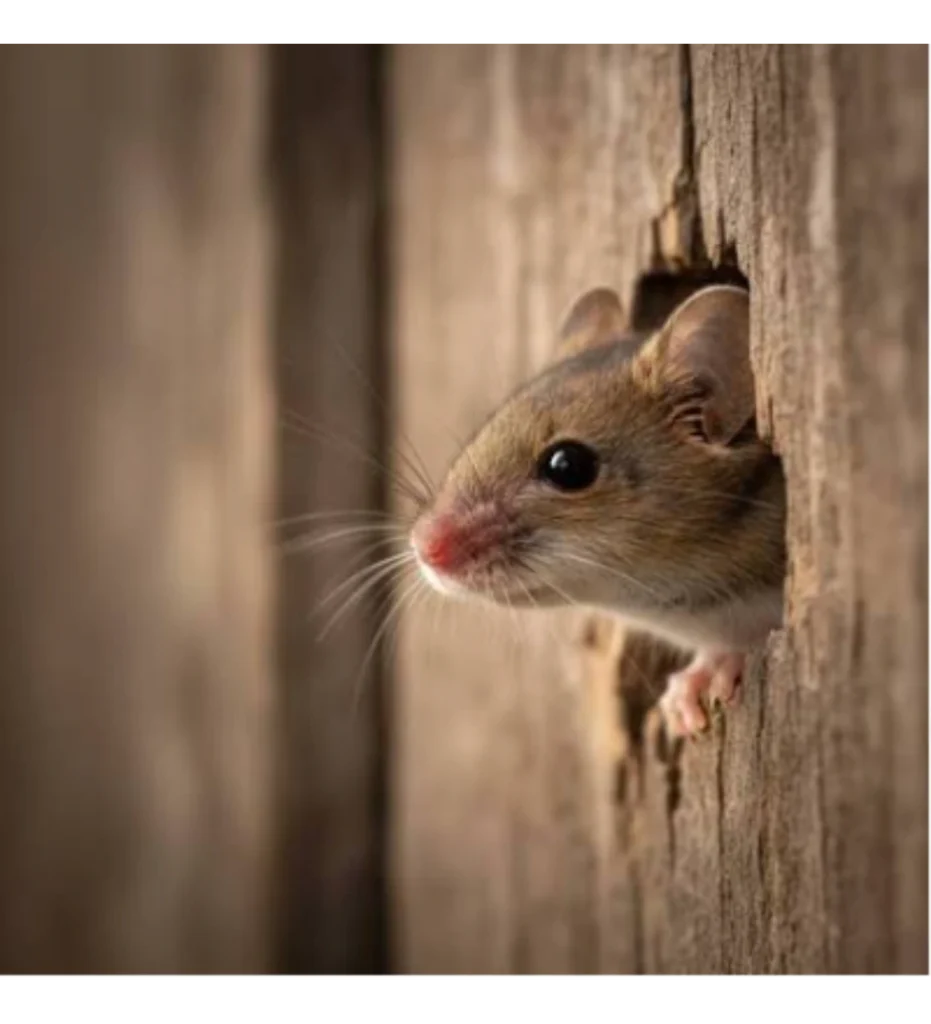
The most common signs of a rodent infestation are droppings, gnaw marks, scratching or scurrying in walls or ceilings at night, greasy rub marks along baseboards, a sharp ammonia odor, and shredded nesting material in attics or crawlspaces. Two or more together often mean rodents are established, not passing through.
Droppings. Dark pellets near food, along walls or in cabinets. Mouse droppings look like rice grains; rat droppings are larger and capsule-shaped.
Gnaw marks. On baseboards, cabinets, wiring and food packaging. Rodent teeth never stop growing, so they gnaw constantly.
Noises at night. Scratching or scurrying in walls, ceilings and attics.
Rub marks. Greasy smears along baseboards and gaps where rodents run the same route again and again.
Odor. A sharp ammonia smell, or a decay smell if a rodent has died inside a wall.
Nesting material. Shredded insulation, paper or fabric in attics, crawlspaces and quiet corners.
Pet behavior. A cat or dog fixated on a wall, vent or cabinet.
One or two signs usually point to an early problem. Several at once mean the population is growing, and every week adds damage and entry points.
Are my rodents rats or mice, and how can I tell?
Mouse droppings are about the size of a rice grain; rat droppings are larger and capsule-shaped. Mice squeeze through a gap the width of a dime, while rats need roughly a quarter-sized opening. Rats tend to avoid new traps for days; mice usually investigate them quickly.
| Rats | Mice | |
|---|---|---|
| Droppings | Larger, capsule-shaped, blunt ends | Small, rice-grain size, pointed ends |
| Gap they can use | About a quarter-sized opening | About a dime-sized opening |
| Species in our area | Norway rat (burrows near foundations and crawlspaces) and roof rat (climbs, enters through rooflines and attic vents) | House mouse, and deer mouse near greenbelts and wooded lots |
| Around traps | Wary of new objects; may ignore a trap for days | Curious; usually investigates new objects quickly |
| Where we usually find them | Crawlspaces, foundations, wall voids, garages and attics | Kitchens, pantries, attics and wall voids near food |
Species decides the plan. A trap or bait strategy built for mice often fails on rats, which is why we identify the species at the inspection, before anything is set.
Are rodents a health risk, or just a nuisance?
Rodents are a real health risk, not just a nuisance. They can carry hantavirus, leptospirosis, salmonella and rat-bite fever. In Washington, the state Department of Health identifies deer mice as the carrier of hantavirus, a rare but serious lung illness.
1 to 5
hantavirus cases reported per year in Washington
About 1 in 3
diagnosed hantavirus cases in Washington have been fatal
Hantavirus spreads when people breathe dust from dried droppings, urine or nesting material, most often while cleaning a closed-up attic, shed or crawlspace. There is no cure. Do not sweep or vacuum droppings; contaminated areas need the right protection and wet cleanup.
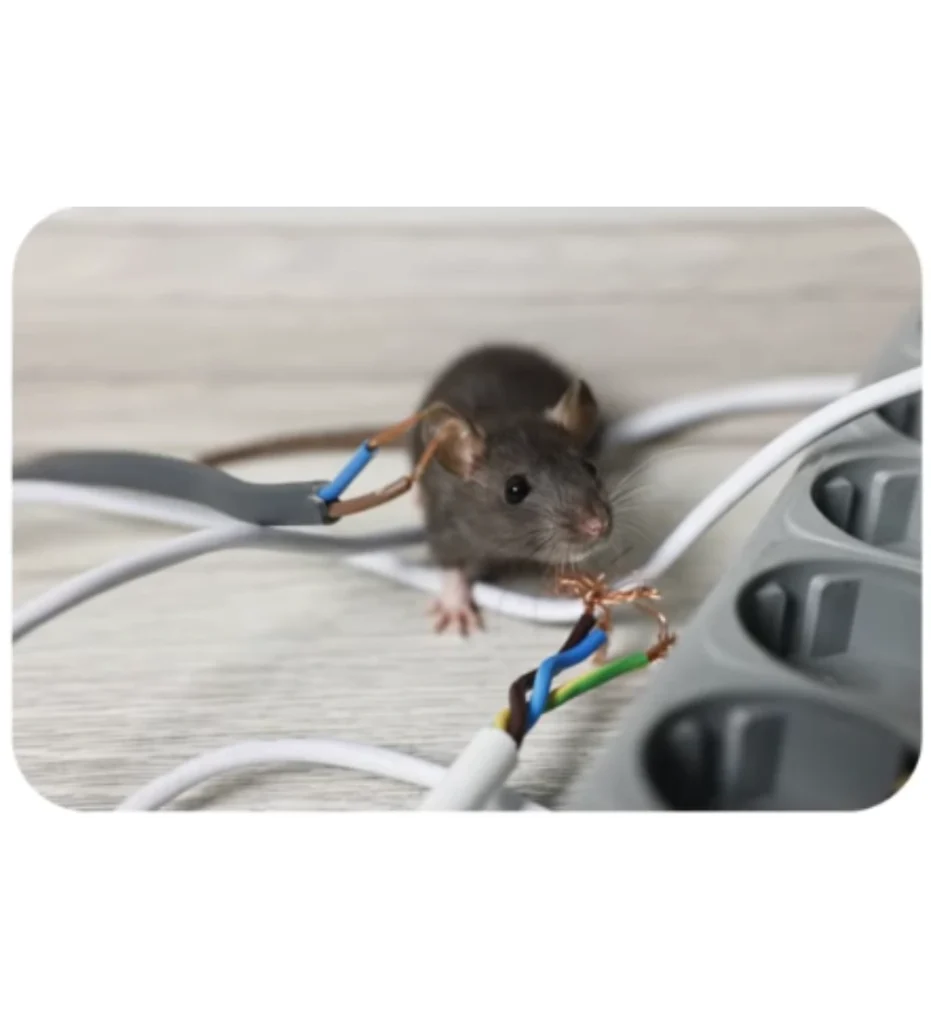
Rodents also chew electrical wiring, a documented fire risk, and soiled or flattened insulation loses its value, which raises heating costs through Everett’s long wet winters.
Sources: Washington State Department of Health, hantavirus and Snohomish County Health Department, rodents and pests.
How does our rodent control process work?
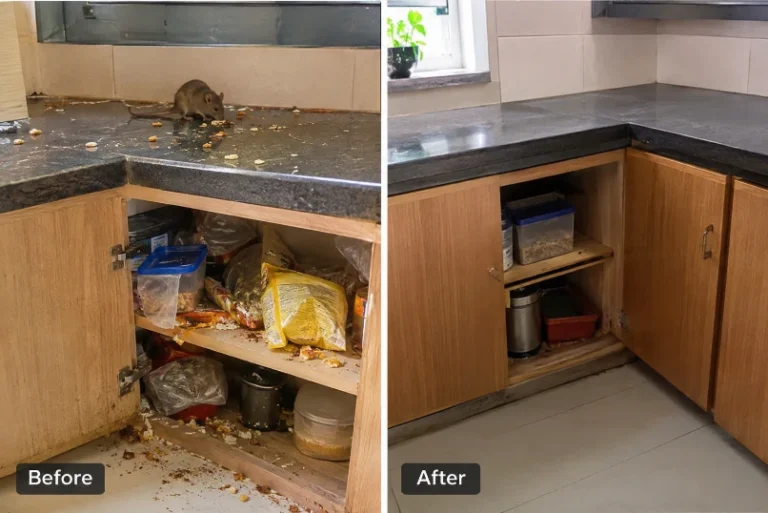
Every job follows four steps: inspect to identify the species and entry points, exclude by sealing those gaps, trap and remove the rodents inside, then monitor with follow-up visits. Sealing comes before trapping so new rodents cannot replace the ones we remove.
1
Inspect
We identify the species and locate active entry points, food and water sources, and nesting areas in the attic, the crawlspace and around the foundation.
2
Exclude
We seal gaps, vents and foundation cracks with materials rodents cannot chew through, so the population inside cannot be topped up from outside.
3
Trap
With outside food cut off, the rodents inside are more likely to enter traps or take bait placed along the walls and edges where they travel. Trap types are matched to the species.
4
Monitor
We return to check traps and confirm the seals are holding. Exterior bait stations, where appropriate, give early warning of a new opening.
How much does rodent control cost in Everett, WA?
Rodent control in Everett is usually priced as an inspection and setup visit, plus exclusion work and sometimes follow-up visits. The final price depends on how many rodents are present, how many entry points need sealing, how hard they are to reach, and whether contaminated insulation must be cleaned. We give an itemized quote after inspection, before any work begins.
Be cautious of any flat price quoted without an inspection, or a “treatment” that leaves the entry points open.
What changes the price
How many rodents. A few mice in a kitchen cost far less to resolve than a rat colony in a crawlspace.
Entry points. A home with three gaps costs less to seal than one with fifteen.
Access. Rooflines, tight crawlspaces and large foundations take more labor.
Cleanup. Contaminated insulation or heavy droppings add a sanitation step.
Can I handle mice or rats myself, or should I call a professional?
You can handle a small, early mouse problem yourself if you can find and seal the entry point. Call a professional for rats, for activity in an attic or crawlspace, or when DIY traps have not stopped it. Rats are warier of traps and nest in several places, and cleaning contaminated areas carries real exposure risk.
DIY can work when
- You see signs of one or two mice, not an established population.
- You can find the entry point and seal it yourself.
- There is no nesting, breeding or heavy droppings.
Call a professional when
- You have rats rather than mice.
- Store-bought traps or bait have not stopped the activity.
- The problem is in an attic or crawlspace with contaminated insulation.
- You are buying or selling a home and an inspection found rodent evidence.
Why do rodents come back even after treatment?
Rodents come back after treatment when the entry points were never sealed. Bait or traps remove the rodents currently inside, but the same gap stays open for the next ones. Everett’s steady rodent pressure means the next one is rarely far away.
Trapping alone can even seem to make things worse for a few weeks, because clearing a territory can draw in new rodents from nearby. The fix is exclusion first, trapping second.
Do ultrasonic rodent repellents actually work?
Ultrasonic repellents have not been shown to reliably clear an existing rodent infestation. Rodents can get used to the sound, and it does not pass through walls or around furniture, so a plug-in unit in one room does nothing for an attic or crawlspace.
Do not rely on one once you can see droppings or hear activity in the walls.
Rodent control vs. animal control: which do you need?
Rodent control deals with rats and mice in and around buildings: inspection, sealing, trapping and prevention. Animal control usually means city or county services for larger wildlife or stray and aggressive animals. If you hear scratching in the attic or find droppings in the kitchen, you need rodent control.
Tree squirrels are technically rodents but are normally treated as a wildlife issue unless they get into a building.
Does Orkin do rodent control in Everett, and how is a local company different?
Orkin offers rodent control, and national companies such as Orkin and Terminix generally serve Washington through regional branches, so check coverage for your address. A local company like Rodent Defenders is based in Everett, builds each job around local housing and weather, and gives an itemized quote after inspection.
Five questions to ask any rodent company, including us
- Will you inspect and identify the species before quoting?
- Is sealing the entry points included, or an add-on?
- Is the quote itemized and given before work starts?
- What happens if rodents come back, and are follow-up visits included?
- How do you handle bait around children, pets and wildlife?
Which Everett neighborhoods do you serve?
We serve all of Everett, WA and the surrounding Snohomish County, including the areas below.
Bayside
Grid streets where rats can travel along storm drains, utility lines and fence rows between yards.
Northwest Everett
Older craftsman-era homes where aging foundations, siding and crawlspace vents are common entry points.
Delta and Riverside
Homes near the river delta, where wet ground and nearby waterways support rodent activity.
Silver Lake
Residential streets and yards backing onto trees and greenbelts, where rodents shelter close to houses.
Evergreen Way corridor
Mixed homes and businesses, with mice often getting into attics and garages.
Port of Everett and waterfront
Commercial and industrial properties, restaurants and warehouses facing steady rat pressure.
View Ridge and Madison
Cul-de-sac neighborhoods where rodents move through fence lines and utility corridors.
Greater Snohomish County
Homes and businesses across the county, from older town centers to newer subdivisions.
What do typical Everett rodent problems look like, and how do we fix them?
These are the three problems we are called about most. They describe typical jobs and our approach, not named customers.
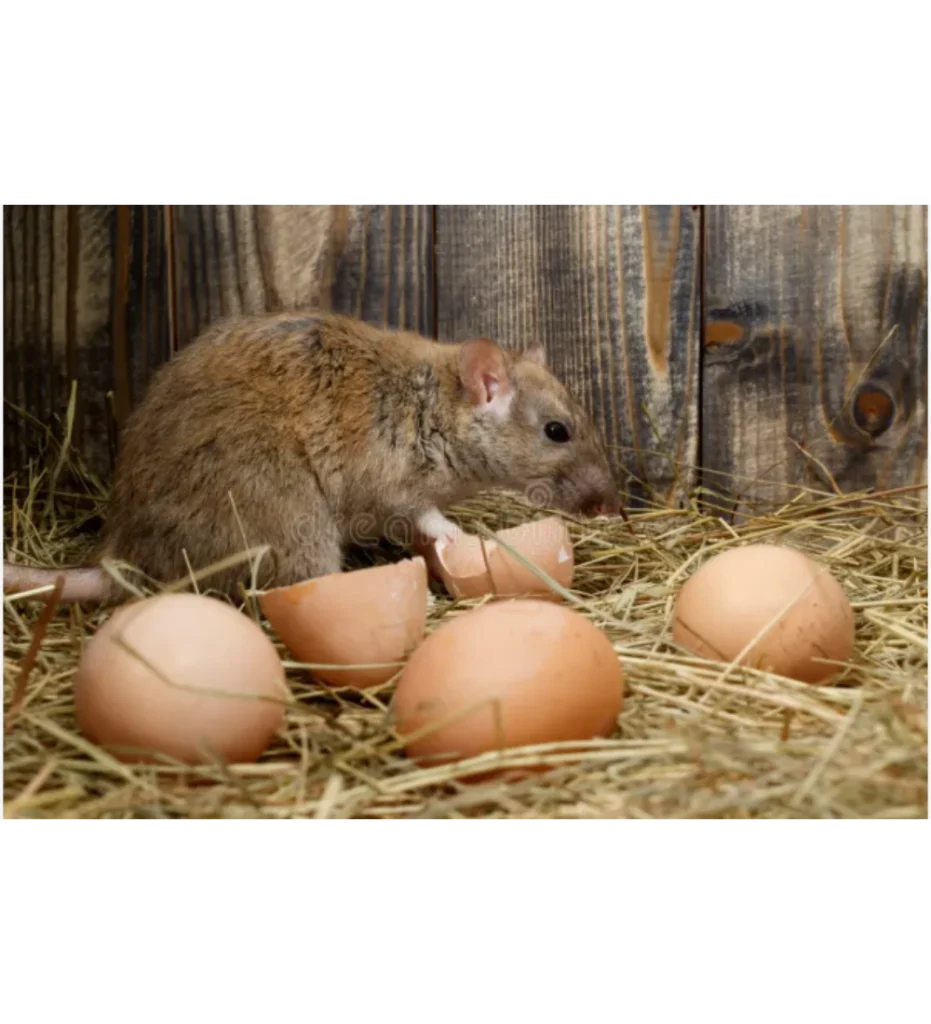
Rats raiding a backyard chicken coop
The problem. Eggs and feed disappear, and droppings show up in the coop and along the fence.
What we look for. Feed stored within reach, gaps under the coop and run, and burrows along the foundation of nearby sheds.
What we do. Move feed into metal containers, close the gaps with heavy-gauge mesh, and place traps inside protected boxes where birds, pets and wildlife cannot reach them.
Roof rats in an older attic
The problem. Scratching overhead every night, and store-bought traps catch nothing.
What we look for. Failed roofline or gable vent screens and branches touching the roof, which roof rats use as a bridge.
What we do. Seal vents with metal mesh, recommend trimming back access branches, set traps along the attic joists, and return to confirm activity has stopped.
Norway rats under a newly bought home
The problem. Droppings and an ammonia odor in the crawlspace, discovered after the purchase.
What we look for. Gaps where the foundation meets the siding, burrows along the perimeter, and contaminated insulation.
What we do. Seal the entry points, assess the insulation, run a monitored trapping program, and re-inspect the crawlspace.
Frequently asked questions about rodent control in Everett
What is rodent control?
Rodent control is the process of finding, removing and preventing the return of rats and mice. Done properly it combines inspection, sealing the entry points, trapping and follow-up visits, not just poison or a single treatment.
What is hantavirus?
Hantavirus is a rare but serious virus carried by deer mice in Washington. People catch it by breathing dust from infected droppings, urine or nesting material. It can cause a severe lung illness, has no cure, and Washington reports only a few cases a year.
How much does rodent control cost?
The price depends on how many rodents are present, how many entry points need sealing, how hard they are to reach, and whether contaminated material must be cleaned. Rodent work usually costs more than a basic pest visit because it includes sealing. Ask for an itemized quote after inspection.
Can pest control get rid of mice?
Yes. Professional mouse control that seals the entry points and then traps what is inside usually resolves a residential mouse problem faster than DIY traps alone, because the source of new mice is closed off.
Can pest control get rid of rats?
Yes, but rats usually take longer than mice. They are wary of new traps and often nest in more than one place, so sealing the structure and monitoring the result matter even more.
Why do mice suddenly appear?
Sudden mice usually mean a trigger: cooler fall weather pushing them indoors, a new food source, or a new opening from settling, storm damage or landscaping. Finding and sealing that opening stops it from repeating.
Are squirrels and rabbits rodents?
Squirrels are rodents, though they are usually handled as wildlife unless they get into a building. Rabbits are not rodents; they belong to a separate group called lagomorphs.
Is it worth calling pest control for mice?
It is worth it when the problem is established, droppings turn up in several places, activity returns after DIY traps, or the mice are in an attic or crawlspace. For one or two mice and an obvious gap you can seal yourself, DIY may be enough.
What is the cheapest way to get rid of mice?
For a small, early problem, seal visible gaps with steel wool and caulk, remove food sources, and set snap traps along the walls. It is cheap but only works if you find every entry point. If mice keep returning, an inspection costs less than repeated guessing.
Ready to find out how rodents are getting into your Everett property?
Call or send a message. We will arrange a free inspection and give you an itemized quote before any work begins.
Rodent Defenders
2615 W Casino Rd, Everett, WA 98204