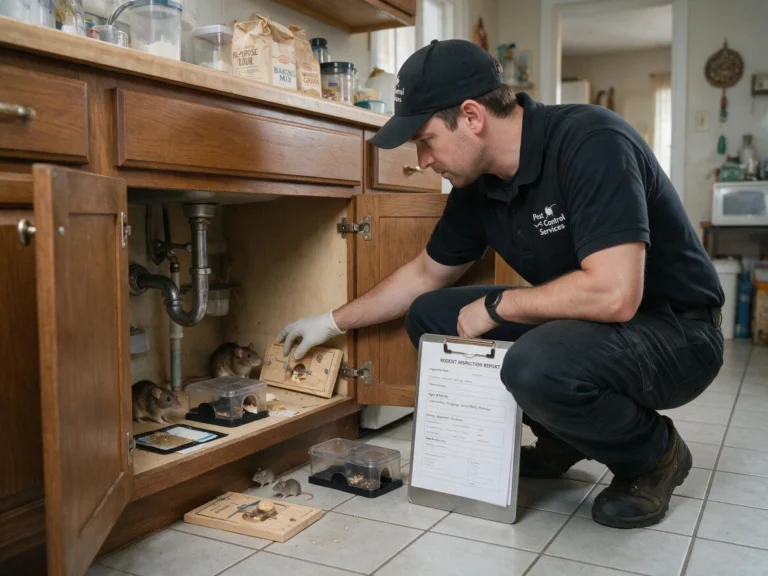
Dead Rodent Removal in Everett, WA
A dead rat or mouse in your home or business usually shows up as a sharp decay smell, flies, or a stain on a ceiling. Rodent Defenders finds the animal, removes it, handles the contamination around it, and seals the gap that let it in. You get an itemized quote before any work starts.

What to Do Right Now
- Keep children and pets away from the area.
- Open windows and doors to air out the space.
- Don’t touch the carcass or dry droppings with bare hands, and don’t sweep or vacuum them.
- Don’t cut into a wall or ceiling. Wiring and pipes are often behind the smell.
- Contact us and tell us where the smell is strongest.
What Rodent Defenders Handles
Locating the carcass
We trace the smell, flies, stains, and nearby gaps to the likely source.
Removal.
We remove carcasses from garages, basements, crawl spaces, attics, and spaces behind cabinets and appliances.
Cleanup.
We clean droppings and nesting material and assess insulation that may be contaminated.
Sealing entry points.
Removing one carcass doesn’t stop the next rodent, so we close the gaps.
If the animal is inside a finished wall or ceiling, we agree on the access opening with you before anything is cut. Drywall patching and painting are handled by a separate contractor.
Signs of a Dead Rodent
- A decay smell that is stronger in one spot, such as near a wall, ceiling, vent, or attic hatch.
- Flies or maggots in one area. Flies alone don’t prove the cause, but they help narrow the search.
- Scratching that stopped. Noise in a wall or attic that ends right before a smell begins is a common pattern.
- A dark stain on a ceiling or wall, which can appear as a carcass breaks down.
Drains, spoiled food, and other animals can smell similar. That’s why we inspect before assuming.
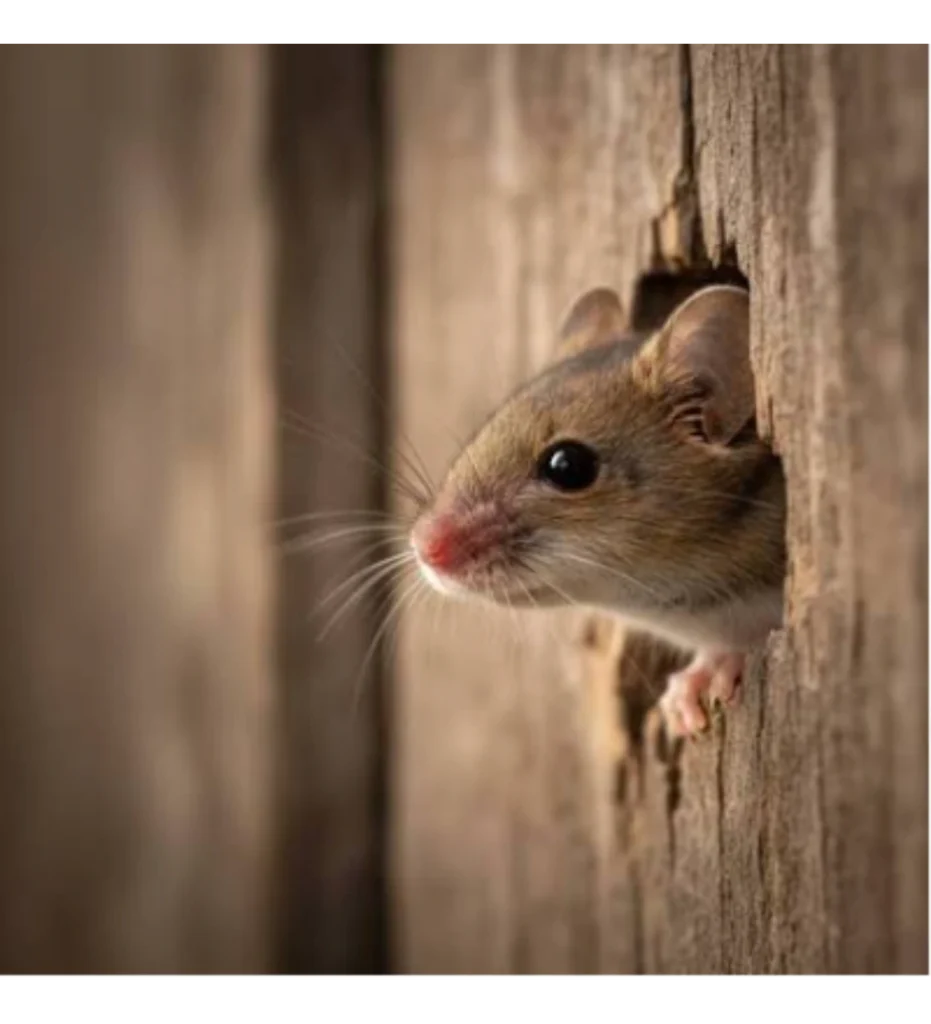
Where Dead Rodents Hide
| Location | Why it’s hard to find |
|---|---|
| Wall cavities | Drywall and framing hide the animal |
| Attics | Insulation covers carcasses |
| Crawl spaces | Low clearance, damp, debris |
| Ceilings | The animal can be above finished material |
| Garages and basements | Stored items and wall gaps |
| Behind cabinets and appliances | Narrow spaces block access |
Why Rodents Die Inside Walls
Poison bait. A poisoned rodent often leaves the bait station and dies somewhere hidden, such as a wall void, ceiling, or crawl space. Baiting inside a building is a common cause of hidden carcasses.
Sealed in. If an opening is closed while a rodent is still inside, the animal can be trapped and die in the wall. We check for active rodents and plan sealing around them.
Natural causes. Rodents also die from illness, injury, or age in the sheltered spaces they use as nests.
If your smell started after bait was put out or after a gap was sealed, tell us when and where. It helps us find the animal faster.
How a Removal Visit Works
- Describe the problem. Tell us where the smell is, when it started, and whether you’ve seen droppings or activity.
- Inspect. We check the strongest-odor area, nearby gaps, and connected spaces. Accessible areas come first.
- Plan access. If the carcass is in the open, we remove it. If it’s behind a wall or ceiling, we explain how we’d reach it and get your approval first.
- Remove and dispose. We use gloves and protective equipment, then contain and dispose of the carcass and contaminated waste.
- Clean and assess. We check for droppings, urine, and nesting material, and decide whether insulation can be cleaned or must be replaced.
- Seal. We close the entry points so the problem doesn’t repeat.
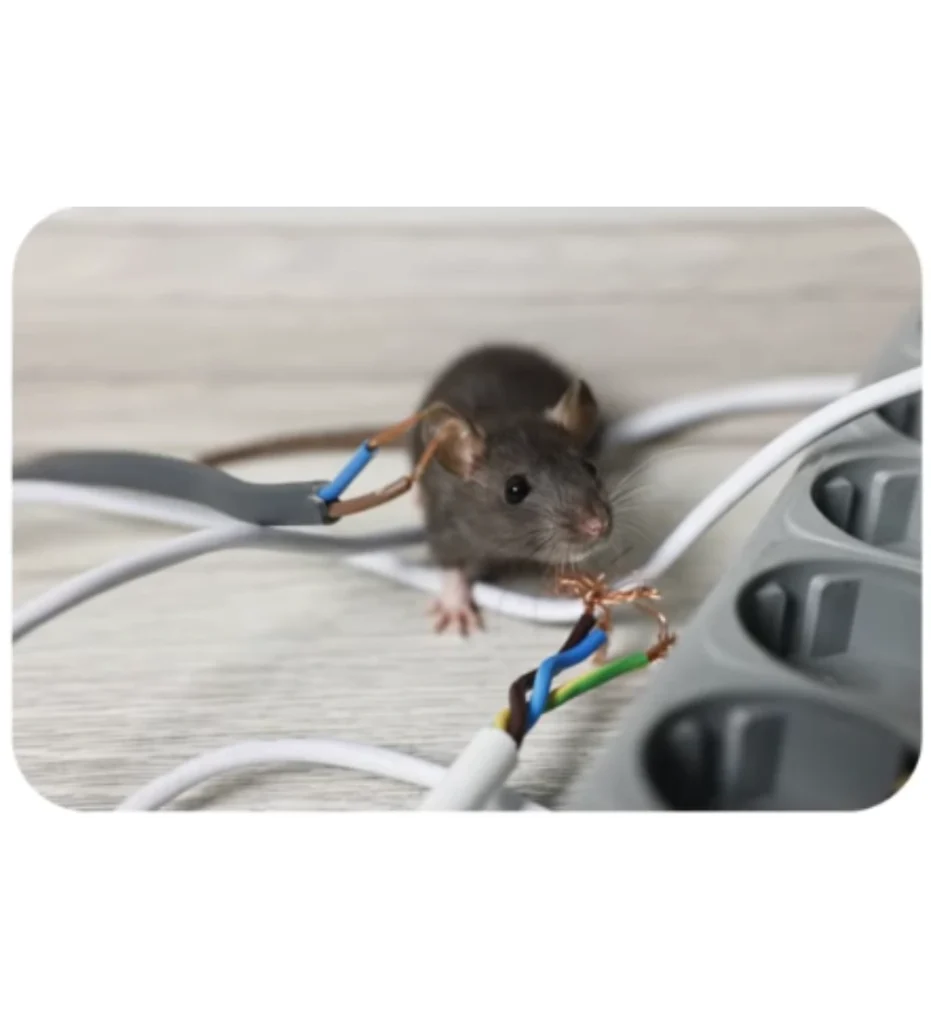
Dead Rodent Smell: How Long It Lasts and What Works
The smell fades once the source is gone. A mouse in an open, ventilated space often stops smelling within a week or two. A rat in a warm, enclosed wall void can smell for several weeks. Size, temperature, airflow, and humidity all change the timeline.
Air fresheners, sprays, and odor absorbers only mask the smell. If the carcass is still in the wall, the odor will return. Once the source is removed and affected materials are cleaned, odor treatment can handle what remains. Soaked insulation is the most common reason a smell lingers, and replacing it usually solves it.
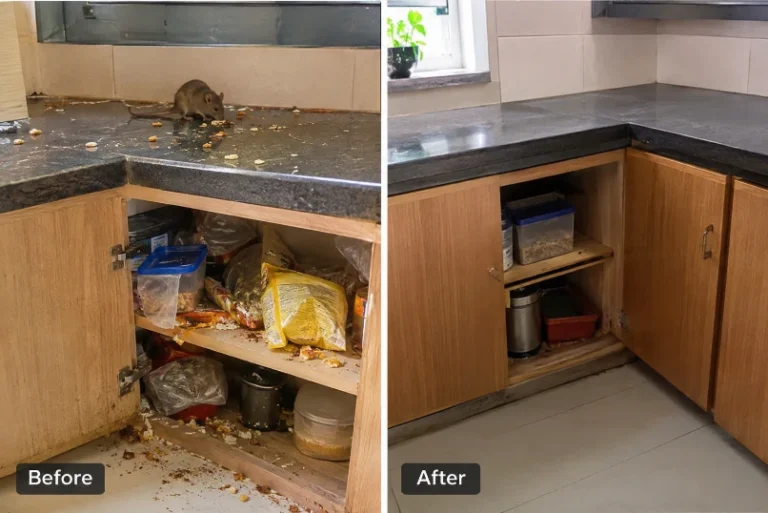
Is a Dead Rat or Mouse Dangerous?
It can be. Rodents carry germs, and people can be exposed through urine, droppings, and nesting material. The Washington State Department of Health identifies deer mice as hantavirus carriers. The virus spreads when contaminated dust is stirred up and breathed in. Infection is rare but serious.
That’s why you shouldn’t sweep or vacuum dry droppings. If you clean up yourself, follow the state’s safe rodent cleanup guide: ventilate first, wear gloves, and wet contaminated material with disinfectant before wiping it up. If you develop symptoms after exposure, contact a healthcare provider and mention the rodent contact.
What Does Dead Rodent Removal Cost in Everett?
The price depends on how hard the carcass is to reach and what cleanup follows. A mouse in an accessible garage is a small job. A rat inside a wall, or contaminated attic insulation, takes more time. We inspect first, then give you an itemized quote before any work begins.
| What changes the price | Why |
|---|---|
| Carcass location | Hidden spaces take longer to search and reach |
| Wall or ceiling access | Opening and repair add labor |
| Cleanup and disinfection | More contamination means more work |
| Insulation removal | Replacement is a separate cost |
| Odor treatment | Needed only if a smell remains |
| Entry-point sealing | Depends on the number and location of gaps |
Before you approve any company’s quote, ask whether it includes locating the animal, disposal, cleaning, odor treatment, and sealing, and who handles wall repair. Be cautious of a flat price given without an inspection.
Serving Everett and Snohomish County
Rodent Defenders is based at 2615 W Casino Rd in Everett and serves homes and businesses across Everett and Snohomish County, including Bayside, Northwest Everett, Delta and Riverside, Silver Lake, the Evergreen Way corridor, the Port of Everett, and View Ridge and Madison.
Everett’s wet marine climate pushes rodents indoors in fall and winter, and damp crawl spaces and attics hold odor and ruin insulation. Older homes with settled foundations, worn vent screens, and gaps around utility lines give rodents plenty of ways in. We look at those spots on every job.
Frequently asked questions about dead rodent removal in Everett
Who removes a dead rat or mouse from a house?
A pest control or dead animal removal company. Ask whether it extracts carcasses from inside walls and attics, because some focus only on trapping. We handle removal and the sealing that prevents a repeat.
Does pest control remove dead rodents?
Some companies do, others don’t. Ask before booking. We remove carcasses as part of our rodent work.
Can you remove a dead rodent from inside a wall?
Yes, when it can be located and safely reached. We agree on the opening with you first, and wall repair is done by a separate contractor.
How do I get rid of a dead rodent smell?
Find and remove the carcass, clean affected surfaces, and replace soaked insulation. Treat odor last. Air fresheners won’t fix a hidden source.
Will the smell go away on its own?
It fades over time, but a carcass left in a wall can smell for weeks. Waiting also draws flies.
Do I need to replace attic insulation?
Not always. We check it for urine, droppings, and nesting material. Contaminated sections get replaced. Clean sections stay.
How much does it cost?
It depends on access and cleanup. You get an itemized quote before work begins.
Is dead rodent removal free in Everett?
Don’t assume it is for a private home or business. Ask any provider for pricing before work starts.
What if the rodent died after eating poison?
That’s common. A poisoned rodent usually dies hidden. Tell us when and where bait was placed.
Get the Smell Source Found and Removed
Don’t wait for a hidden carcass to get worse. Contact us, describe where the smell is strongest, and we’ll arrange an inspection and give you an itemized quote first.
Rodent Defenders
2615 W Casino Rd, Everett, WA 98204