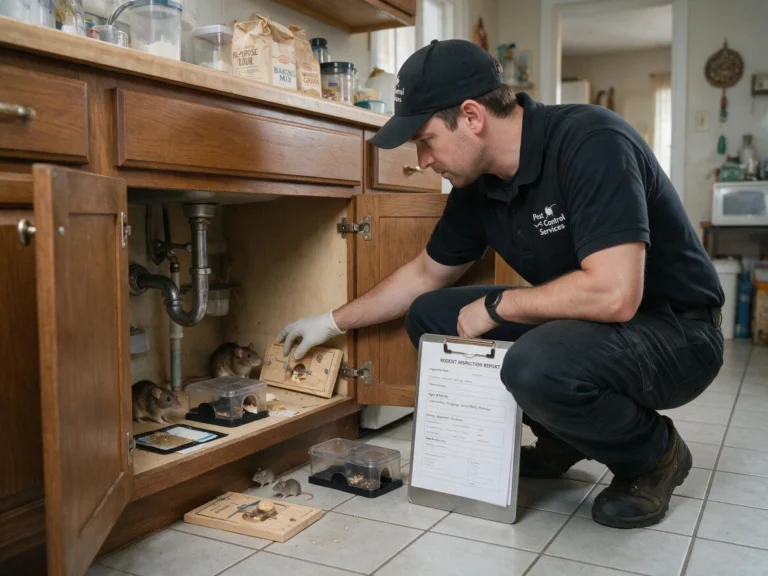
Norway Rats in Everett, WA
Norway rats are heavy-bodied burrowing rats that live at ground level around foundations, crawl spaces, basements, and yards. They are one of the two rat species we see in Everett. They get in through gaps near the foundation and utility lines, and sealing those gaps is what stops them returning.
Not sure what you’re dealing with? Contact us
What a Norway Rat Looks Like
- Thick, heavy body, roughly 7 to 9 inches long without the tail
- Blunt snout and small ears
- Tail shorter than its head and body
- Brown to gray fur
- Capsule-shaped droppings with blunt ends
Roof rats look different: slimmer, with a pointed nose and a longer tail. See roof rats.
Where Norway Rats Nest
Norway rats prefer the ground. In Everett properties we look for:
- Burrows along foundations, under sheds, decks, and slabs
- Crawl spaces, basements, and garages
- Dense ground cover, woodpiles, and cluttered corners
- Storm drains and utility corridors, especially in grid-street areas like Bayside
Signs of Norway Rats
Burrow holes about the width of a fist, often along walls or foundations
Capsule-shaped droppings near food, bins, or burrows
Gnawing on wood, pipes, wiring, and packaging
Greasy rub marks along walls
Noises under floors or in walls
Missing eggs and feed near chicken coops
Why Norway Rats Come Into Everett Properties
Wet fall and winter weather sends them looking for dry shelter. Older foundations with settled gaps, worn siding, and failing vent screens give them routes. Food is the other draw: pet food, bird seed, compost, garbage, and chicken feed. Properties near the Port of Everett, restaurants, and waterfront storage face steady pressure.
Health and Property Risks
Rats can carry germs that cause illness, and droppings and urine can contaminate food and surfaces. They also chew wiring, which is a fire risk, and they ruin insulation. For safe cleanup, see the Washington State Department of Health’s rodent guidance.
How We Control Norway Rats
- Inspect. We confirm the species and find burrows, entry points, and food sources.
- Exclude. We seal gaps at the foundation, vents, and utility lines with materials rats can’t chew through.
- Trap. Rats are wary of new objects, so trapping can take several visits. Traps go in protected boxes away from children, pets, and wildlife.
- Monitor. We return to confirm the seals are holding.
See rat control in Everett and exclusion.
What You Can Do
- Keep pet food, bird seed, and chicken feed in sealed metal or hard plastic containers
- Use secured garbage and compost bins
- Keep woodpiles and debris away from the house
- Don’t seal burrows yourself before an inspection
Frequently Asked Questions
Are Norway rats dangerous?
They can carry germs and contaminate food and surfaces. Avoid touching droppings or nests.
Do Norway rats climb?
They can, but they mostly stay at ground level. Roof rats are the better climbers.
How do I know if I have rats and not mice?
Rat droppings are larger and capsule-shaped, and rat burrows are bigger.
Will traps alone get rid of Norway rats?
Not if entry points stay open. New rats follow the same route.
Get the Rodent Identified and Removed
Contact us for an inspection and an itemized quote before work begins. Rodent Defenders, 2615 W Casino Rd, Everett, WA 98204.
Rodent Defenders
2615 W Casino Rd, Everett, WA 98204