Our Rodent Control Process in Everett, WA
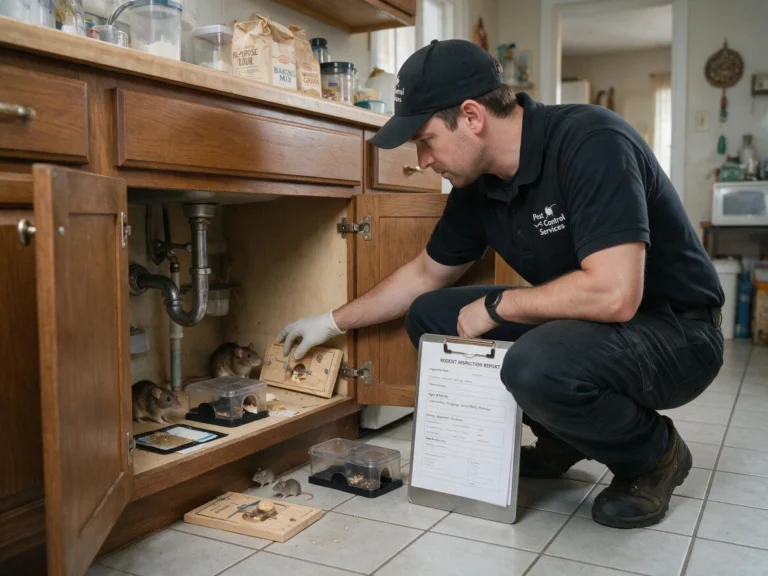
Our rodent control process has four steps: inspect, exclude, trap, and monitor. We identify whether you have rats or mice and find every entry point, seal those gaps, remove the rodents already inside, and return to confirm the fix is holding. You get an itemized quote before any work begins.
Hearing scratching or finding droppings? Contact us

The Four Steps at a Glance
| Step | What happens | Why it matters |
|---|---|---|
| 1. Inspect | We identify the species, entry points, food and water sources, and nesting areas | The plan depends on what you actually have |
| 2. Exclude | We seal gaps, vents, and cracks with materials rodents can’t chew through | New rodents can’t replace the ones we remove |
| 3. Trap | We remove rodents inside with traps matched to the species | Removal works once the source is closed |
| 4. Monitor | We return to check traps and confirm the seals are holding | Problems get caught early |
Step 1: Inspection and Species Identification
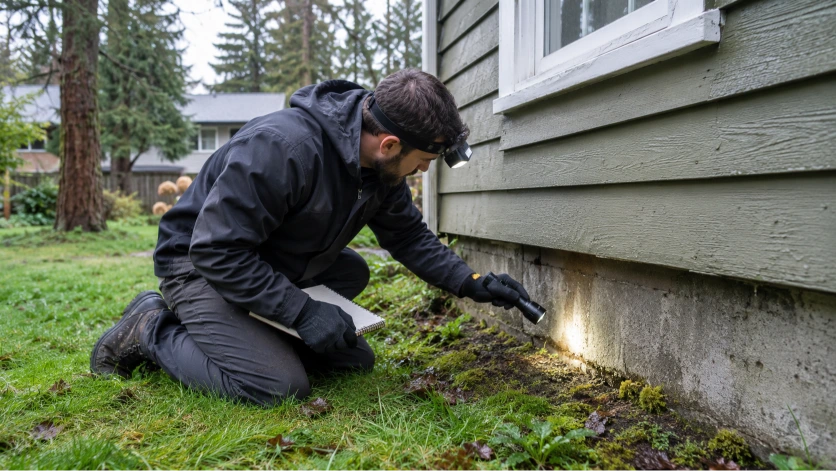
Every job starts with a full inspection, and it comes before any quote. We need to know whether you’re dealing with rats or mice, because the right plan is different for each.
What We Look for Inside
- Droppings, gnaw marks, and greasy rub marks along baseboards
- Nesting material in attics, crawl spaces, and wall voids
- Damaged or soiled insulation
- Food and water sources that keep rodents coming back
What We Look for Outside
- Gaps where the foundation meets the siding
- Worn or missing vent screens
- Openings around pipes and utility lines
- Rooflines and overhanging branches that act as bridges to the roof
- Burrows along the foundation or near sheds
Rat or Mouse?
Mouse droppings are about the size of a rice grain. Rat droppings are larger and capsule-shaped. A mouse can squeeze through a gap about the width of a dime, while a rat needs roughly a quarter-sized opening. In our area we see Norway rats, roof rats, house mice, and deer mice. A strategy built for mice often fails on rats, so we identify the species before anything is set.
When the inspection is done, you get a written, itemized quote that shows the scope and the price before work begins. See our rodent inspection service.
Step 2: Exclusion (Sealing Every Entry Point)
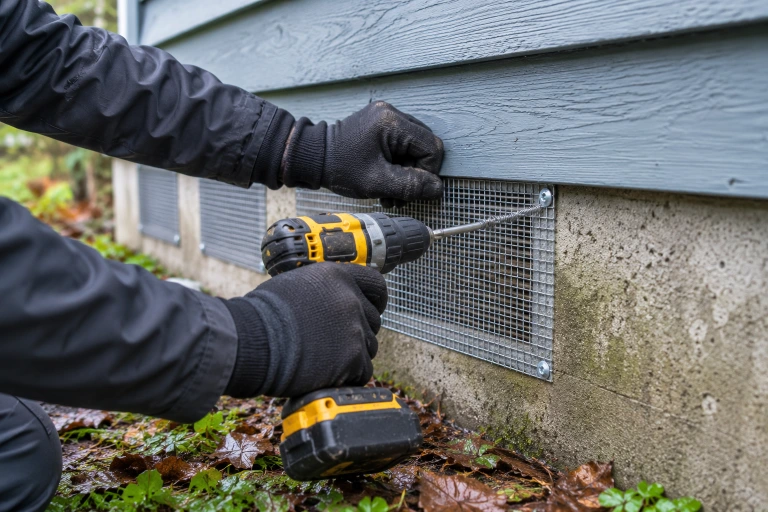
Exclusion means closing the gaps that let rodents in. We use materials rodents cannot chew through, such as metal mesh over vents and heavy-gauge mesh where gaps are large, rather than foam or fillers rodents can gnaw.
Typical exclusion work includes:
- Sealing foundation cracks and gaps near the siding
- Screening roofline, gable, and crawl space vents
- Closing openings around pipes and utility lines
- Repairing gaps near doors and garage doors
We also point out things we can’t fix, like branches touching your roof, so you can deal with them.
Because a rodent already inside a wall or attic could be trapped by a sealed opening, we plan the sealing around any active rodent movement. See our rodent exclusion service.
Step 3: Trapping and Removal
Once the entry points are closed, the rodents inside are far more likely to enter traps or take bait placed along the walls and edges where they travel. We match the trap type to the species:
- Mice are curious and usually investigate new objects quickly.
- Rats are wary of new objects and may ignore a trap for days, so trapping rats takes more patience and more visits.
We place traps in protected boxes where children, pets, and wildlife can’t reach them. Where bait is appropriate, we tell you where it is and why. If a rodent dies somewhere hidden, we handle that too. See our dead rodent removal service.
Step 4: Follow-Up and Monitoring
We come back. Follow-up visits let us check traps, confirm the seals are holding, and look for new activity. Where appropriate, exterior bait stations give early warning of a new opening before it turns into a new problem.
If a gap opens up after a storm, a settling foundation, or landscaping changes, monitoring is how it gets caught early.
Cleanup After Rodent Control
Rodent control doesn’t always end with removing the animals. Droppings, urine, and nesting material may need cleaning, and insulation may be contaminated.
- Attics: We inspect insulation for contamination and assess whether it can be cleaned or must be replaced. See attic cleanup.
- Crawl spaces: Damp, low-clearance areas need careful inspection. See crawl space service.
Cleaning droppings stirs up dust, and the Washington State Department of Health identifies deer mice as hantavirus carriers. Don’t sweep or vacuum dry droppings, and don’t clean a closed-up attic or crawl space without proper precautions. Our Hantavirus Safety page explains what to avoid.
Why We Seal Before We Trap
We seal before trapping because rodents keep coming in if the gaps stay open. Bait or traps only remove the animals currently inside. If entry points are still open, new rodents follow the same route, and the problem comes back.
Trapping alone can even seem to make things worse for a few weeks, because clearing a territory can draw in rodents from nearby. Exclusion first and trapping second keeps the population from being topped up from outside.
How Our Quote Works
You get an itemized quote after inspection and before any work begins. It reflects the actual building and the actual problem. The main things that affect the price are:
- How many rodents are present
- How many entry points need sealing
- How hard the building is to reach, such as rooflines and tight crawl spaces
- Whether contaminated insulation or heavy droppings require cleanup
- Whether follow-up visits are needed
Be cautious of any company that quotes a flat price over the phone without an inspection, or a “treatment” that leaves the entry points open.
How Our Process Fits Everett
Everett has a marine climate with mild, wet winters and high humidity most of the year. In fall, rats and mice leave burrows and yard cover for dry, warm shelter in crawl spaces, attics, and wall voids, and winter rain keeps them there once a nest is established.
The housing makes a difference. Older craftsman-era homes in Bayside and Northwest Everett can have settled foundations, moisture-softened siding, and worn vent screens. Areas near greenbelts and trees, like Silver Lake, can bring deer mice close to homes. Properties along the Port of Everett waterfront and the Evergreen Way corridor often deal with steady pressure from rats and mice around dumpsters, storage, and loading areas. Our four steps stay the same, but where we look first depends on the property.
Rodent Defenders is based at 2615 W Casino Rd in Everett and serves homes and businesses across Everett and Snohomish County. See our commercial rodent control service for businesses.
What You Can Do to Help
- Tell us where and when you noticed activity
- Store food, pet food, and chicken feed in sealed containers
- Trim branches touching the roof
- Don’t block or move traps or bait stations
- Don’t seal gaps yourself before we inspect, as that can trap a rodent inside
Frequently Asked Questions
What is the rodent control process?
It’s a four-step approach: inspect to identify the species and entry points, exclude by sealing those gaps, trap to remove rodents already inside, and monitor with follow-up visits.
Why do you seal entry points before trapping?
So new rodents can’t replace the ones we remove. Without sealing, the problem returns.
Do you use poison?
Where bait is appropriate, we place it carefully and tell you where it is. We rely mainly on sealing and trapping, because poison alone doesn’t close the entry points, and poisoned rodents can die in hidden spaces.
How many visits will it take?
It depends on the species, the number of rodents, and the building. Rats usually take longer than mice. We explain the plan when we give you the quote.
Do you only treat homes?
No. We also work with restaurants, warehouses, shops, offices, and other commercial properties.
Can rodents come back after treatment?
They can if a new opening appears. That’s why we monitor, and why sealing matters more than any single trap or bait.
Start With an Inspection
Contact us, tell us what you’re seeing, and we’ll arrange an inspection and give you an itemized quote before any work begins.
Rodent Defenders
2615 W Casino Rd, Everett, WA 98204